PoE Ninja is an analytics and reference platform for Path of Exile players. It is not a game and not a marketplace. It is a free third-party site that reads public data from Path of Exile and Path of Exile 2 and organises it so players can look things up.
Path of Exile is the game, made by Grinding Gear Games. PoE Ninja is the independent platform that organises and explains the data the game produces. You check the numbers there, then trade through the official trade site or in game.
What you can check on it

How a price gets to your screen
Every item listed in a public stash tab is pulled through the official API.
Price-fixed listings and statistical outliers are stripped out.
What remains is reduced to one representative value per item, per league.
A working model of how the real thing behaves. Switch games, change league, move between economy and build meta, then open any row to see what actually sits behind the number. Learn to read it here, then go and use it for real.
Opening it is easy. Reading it correctly is where currency is won and lost. Each step below has the part most players skip.
This is a guide to the tool, not the tool itself. No live data is hosted here. Go to poe.ninja for current figures.
Every number is scoped to one league. Currency, item values and build popularity are all rebuilt from zero each time a new league starts, and Path of Exile 2 is tracked entirely separately from Path of Exile.
Most skipped Standard has years of accumulated wealth behind it, so its prices look nothing like a fresh league. Reading the wrong one is the most common expensive mistake.Currency, uniques, divination cards and fragments each have their own overview, with a value and a recent change figure. Use it to sanity check what you are about to pay or ask for.
Most skipped Check how many listings sit behind a value. Under roughly twenty, that price is a handful of opinions rather than a market rate. Open any row in the console above to see this.Builds can be narrowed by class, ascendancy, main skill, keystone or unique item. Filtering to your own constraints tells you far more than the default popularity ranking does.
Most skipped The sample is only characters ranked high enough on the ladder to be measured. It shows what players who were already doing well happened to run, which is not the same as what will work for you.Whatever appears in all three is the build. Whatever appears in one is that player's budget. This single habit separates the core of a build from the expensive parts you can safely skip.
Most skipped The top-ranked character is usually the best funded one, so their item list is the least useful starting point. Scroll down the sample instead.Any listed character can be exported as a code and imported into Path of Building, bringing the tree, gems and gear across intact. Test gear swaps and tree changes there before spending anything.
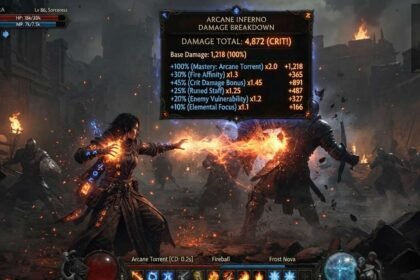
Most skipped Displayed damage figures assume a specific configuration: buffs active, flasks up, charges full. Open the config tab before trusting the number.PoE Ninja does not set prices. It reports what Path of Exile players are asking for items, then reduces thousands of those listings into one figure. That figure is most useful once you understand the selected league, recent movement, trading volume and differences between item versions. These guides explain what to check before treating one number as an item’s real value.
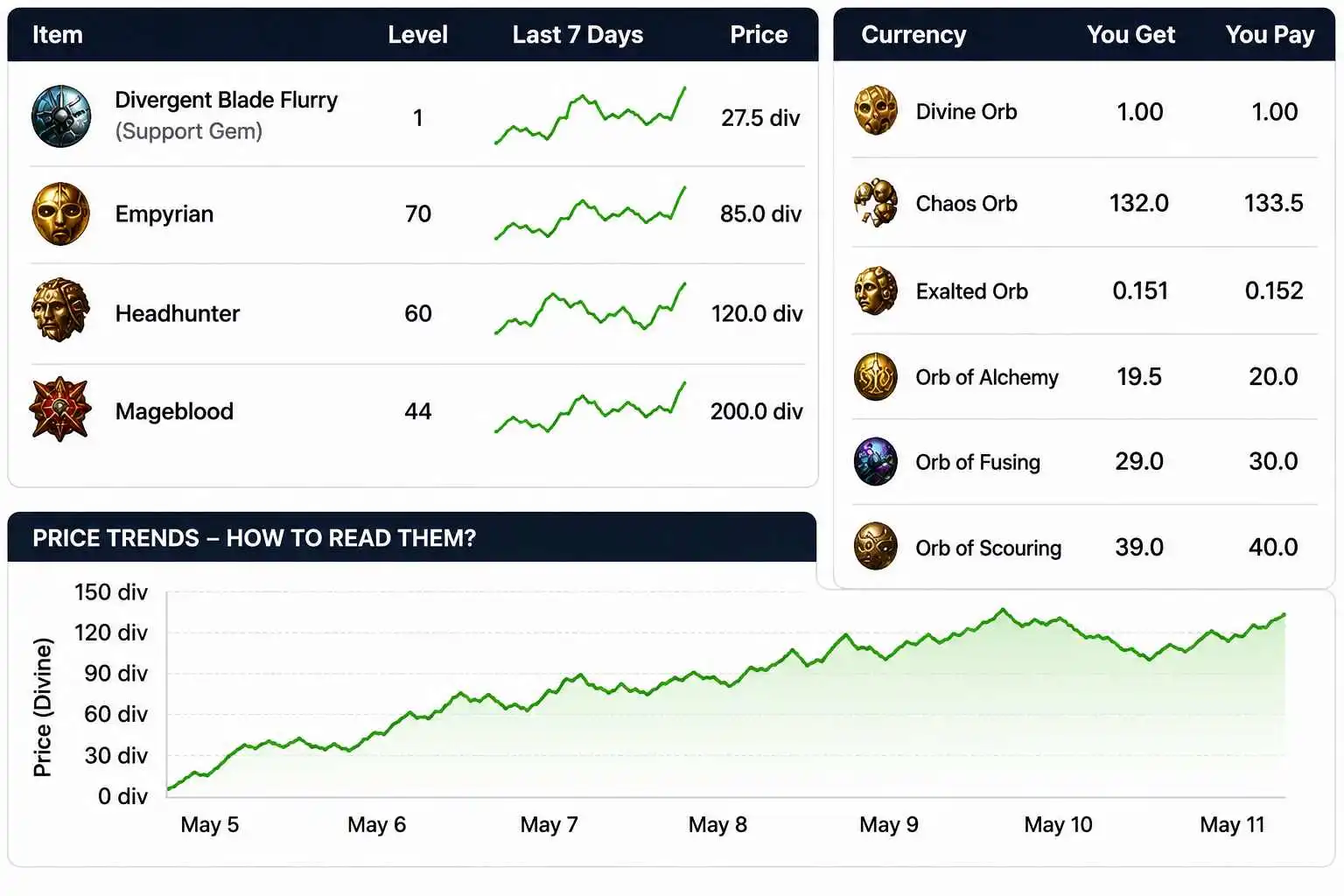
01
A summary figure is only as good as the listings behind it. What the filtering keeps, what it throws away, and how close the result lands to what you will actually pay.
Read guide02
A rising line tells you where a price has been, not where it is going. How to separate a real trend from patch noise and league start volatility.
Read guide03
The lowest price is often a mispriced dump, a stale listing, or bait. How to tell which before you waste a whisper.
Read guide04
Day three and week eight describe two different economies. Timing moves the number more than the item ever does.
Read guide05
Two items with the same name can differ tenfold in price. Which modifiers carry the value and which are decoration.
Read guide06
A summary value is where pricing starts, not where it ends. Before any trade worth more than a few divines, verify the figure against live listings on the official trade site, filter out the unreachable sellers, and price against what is genuinely available right now.
Read guidePoE Ninja does not rank builds. It reads the public ladder that Path of Exile and Path of Exile 2 publish, then organises those characters into an overview you can filter. What you see is what the top of the ladder is running, which is not the same as what will work for you. These guides cover how the sample is collected, what the damage and defence figures quietly assume, and why your own character may not appear in the list at all.
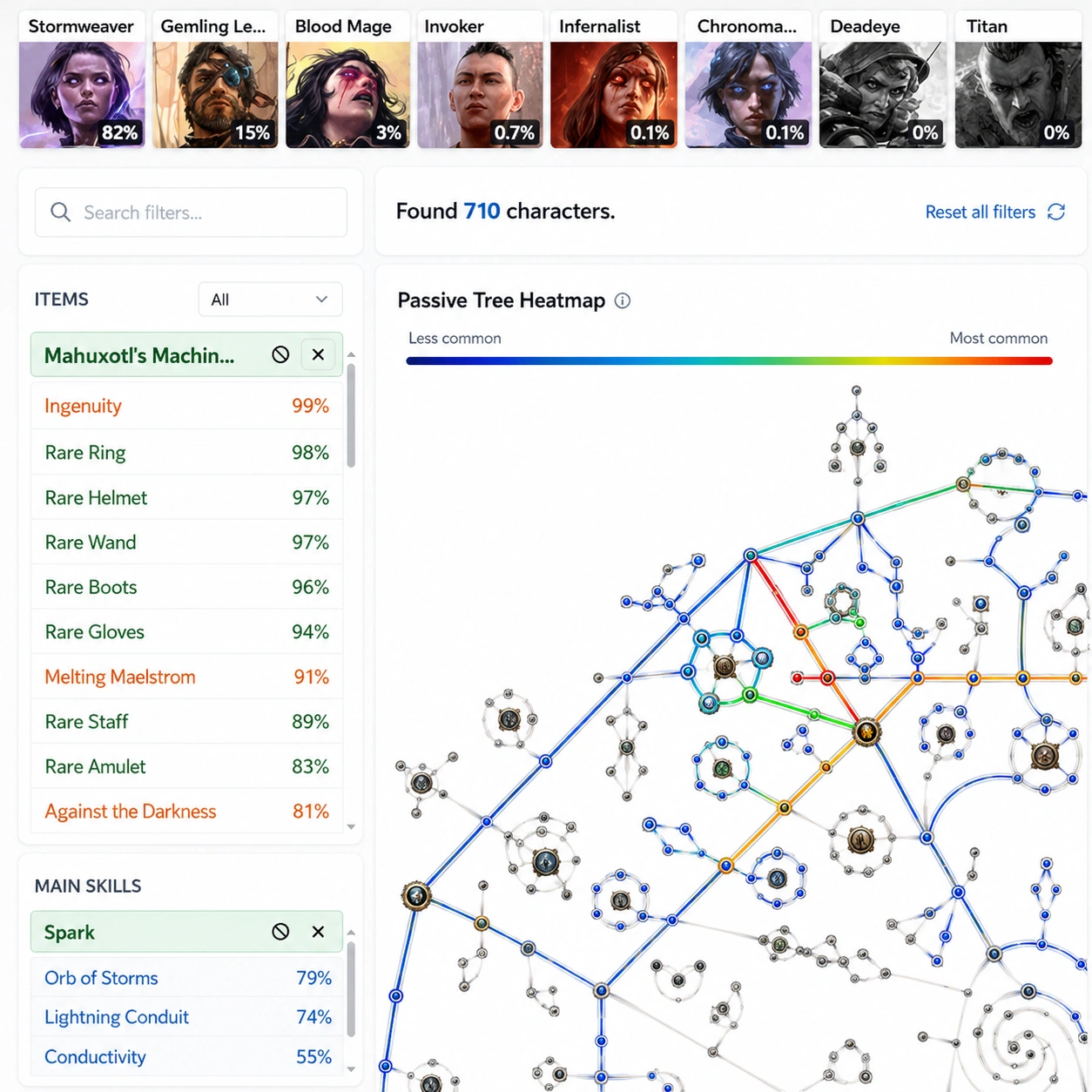
The ladder belongs to the game, not to PoE Ninja. Grinding Gear Games' developer documentation sets these limits and confirms that Path of Exile results can be sorted by class. Any platform reading that ladder inherits the same window, so every build overview is drawn from inside it. The ladder is a record of the top of the game, not a record of everyone playing it, which is the single most important thing to hold in mind when reading popularity figures.
These are two separate community tools that hand data to each other. PoE Ninja reads the Path of Exile ladder and gives you a character as a single export code. Path of Building takes that code and works out what the character actually does. Neither is made by Grinding Gear Games and neither is a game. The guides below follow the handoff between them, and the three places it usually goes wrong.
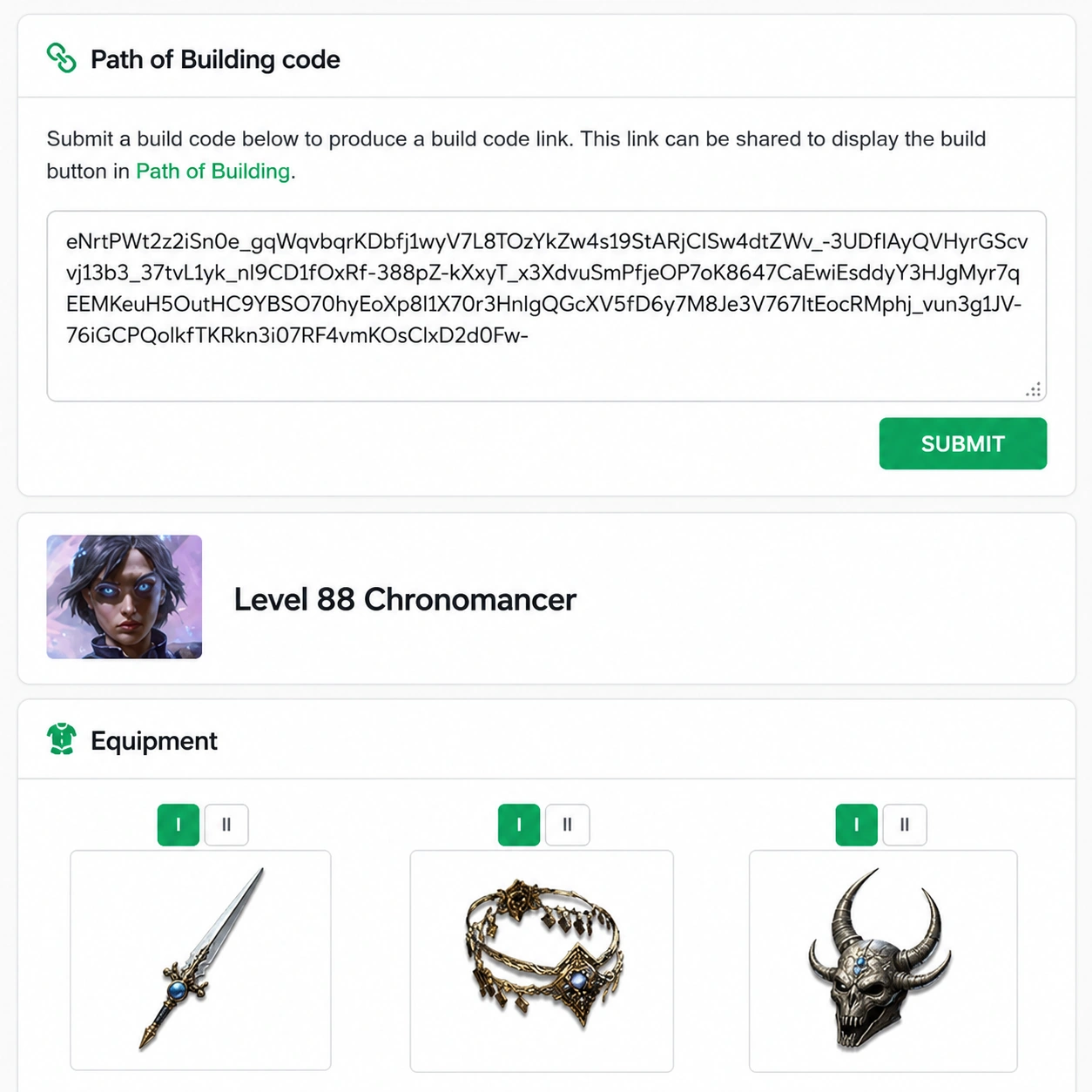
PoE Ninja hands over a whole character as one code: tree, gems, gear and ascendancy.
Path of Building cannot produce a number until you tell it what fight you are in.
A damage figure only means something against the exact setup that produced it.
The two games run as separate titles with separate economies, separate ladders and separate metas, which is why every tracker keeps them apart rather than blending them. Currency, items and builds never carry over, so a chaos orb in one holds no relationship to a chaos orb in the other, and a dominant build in one says nothing about what works in the other.
Ladder depth per the official API reference
Treating both games as one dataset would blur prices, build popularity and meta trends that have nothing to do with each other. Every economy, build and tree view stays split by game so the numbers always reflect the correct ladder and the correct market.